
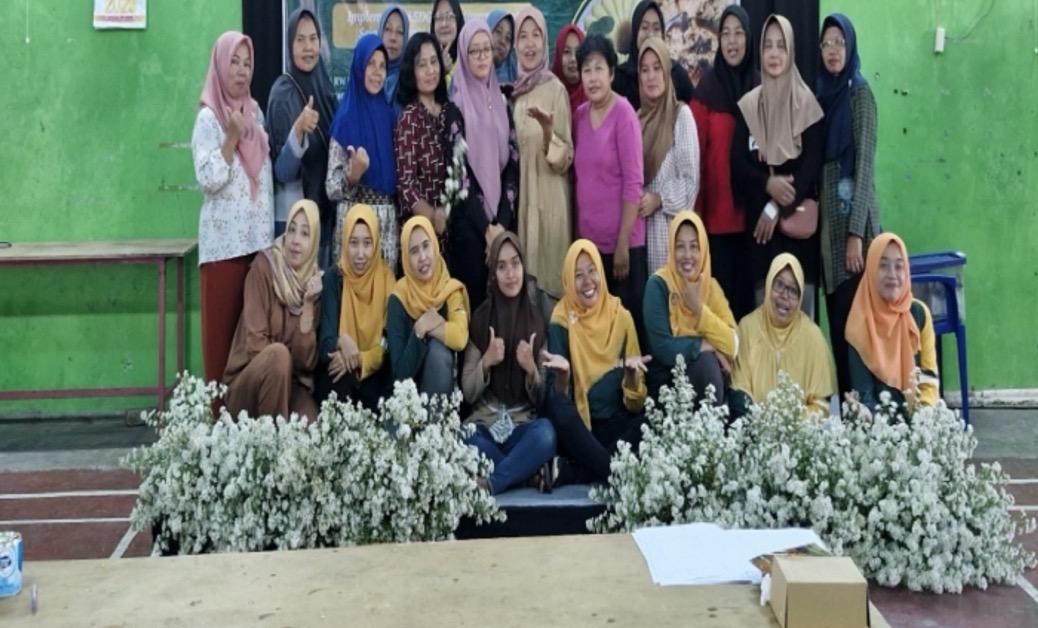
SEMARANG — A community service team from the Agribusiness Study Program, Faculty of Animal and Agricultural Sciences (FPP), Diponegoro University (UNDIP), conducted a decoupage training programme to enhance the creative skills of homemakers and create opportunities for income generation. The programme took place at Taman Lansia, Gajahmungkur District, Semarang City, on 20 July 2025, under the theme “Enhancing the Economic Capacity of Homemakers through Decoupage Training in Semarang City.”
The programme was developed in response to the potential of homemakers to engage in skills-based productive activities, as well as the need for training that can be undertaken flexibly from home. Through this programme, participants were introduced to the decoupage craft technique, which can be used to create products with functional and aesthetic value, as well as potential market value.
The community service team was led by Pramesti Megayana, S.P., M.Sc., with Fatikhah Nurul Fajri, S.P., M.P., and Siwi Gayatri, S.Pt., M.Sc., Ph.D., as team members. The programme was initiated as an effort to empower the community by strengthening participants’ capacities and practical skills.
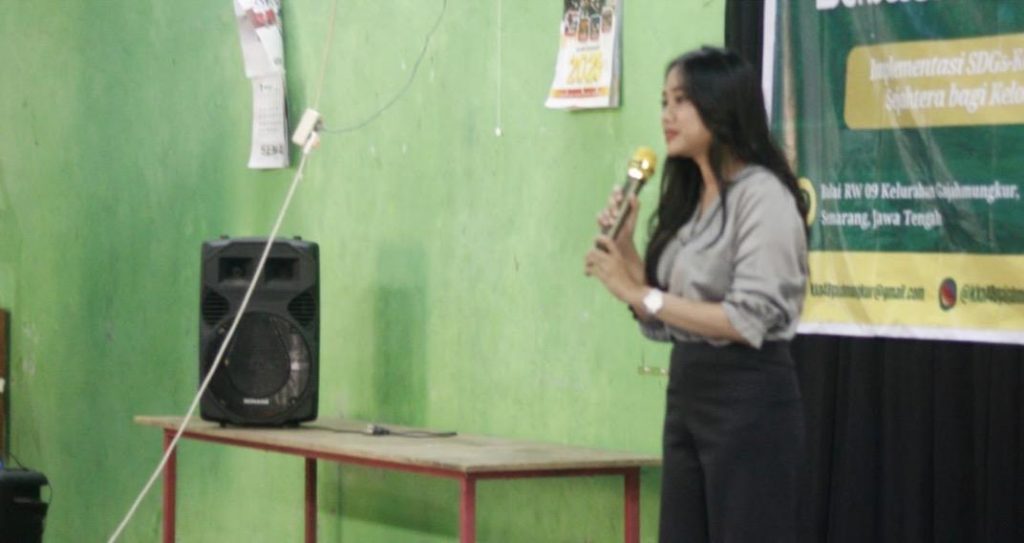
“Through decoupage training, we aim to encourage homemakers to transform their creativity into productive skills. We hope that these skills will not only be used to create crafts for personal use, but may also be developed into home-based business opportunities with the potential to supplement household income,” said Pramesti Megayana.
The training adopted a hands-on approach to ensure that participants could understand and apply each stage of the production process. It began with an introduction to decoupage techniques, the selection of materials and surfaces, and the choice of designs or images. Participants then practised cutting out the selected motifs, attaching them with adhesive, and completing the finishing process to produce neat and visually appealing items.
Throughout the training, the community service team provided demonstrations and direct guidance. Discussion sessions were also held to address challenges encountered during the practical activities and to explore opportunities for developing decoupage products into marketable crafts.
The implementation of the programme indicated that participants were able to follow the training stages effectively and demonstrated enthusiasm in practising the techniques introduced. In addition to acquiring new skills, participants gained insights into the potential of creative products as an alternative form of productive activity that can be carried out from home.
Decoupage is a decorative technique that involves applying cut-out images or patterns to an object’s surface and coating them to create a decorative finish. The technique can be applied to a variety of materials, including wood, glass, tin cans, and other household items. Because it requires relatively simple materials and tools, decoupage has potential to be learned and practised at the household level.
Through this programme, the community service team hopes that the skills acquired will serve as an initial step for homemakers to further develop their creativity, strengthen their self-confidence, and initiate craft-based business activities. Further product development may focus on improving product quality, diversifying designs, enhancing packaging, and strengthening marketing strategies to increase product appeal to prospective consumers.
This decoupage training programme represents one of the contributions made by higher education institutions to community empowerment. Through training and mentoring, UNDIP seeks to encourage the utilisation of creative potential and skills as an alternative means of expanding household economic opportunities.